
St. Johns County Demolition Planning: Permit Offices, Historic Review, Coastal Lots, and Debris Rules
Short answer: a St. Johns County demolition starts with the parcel’s jurisdiction. Most of the county, from Ponte Vedra Beach to Hastings, is unincorporated and permits through the St. Johns County Building Department; St. Augustine and St. Augustine Beach issue their own. Then three County-specific checks shape the schedule: a historic-resource review before the permit, a franchised debris hauler, and, on oceanfront lots, the Coastal Construction Control Line.
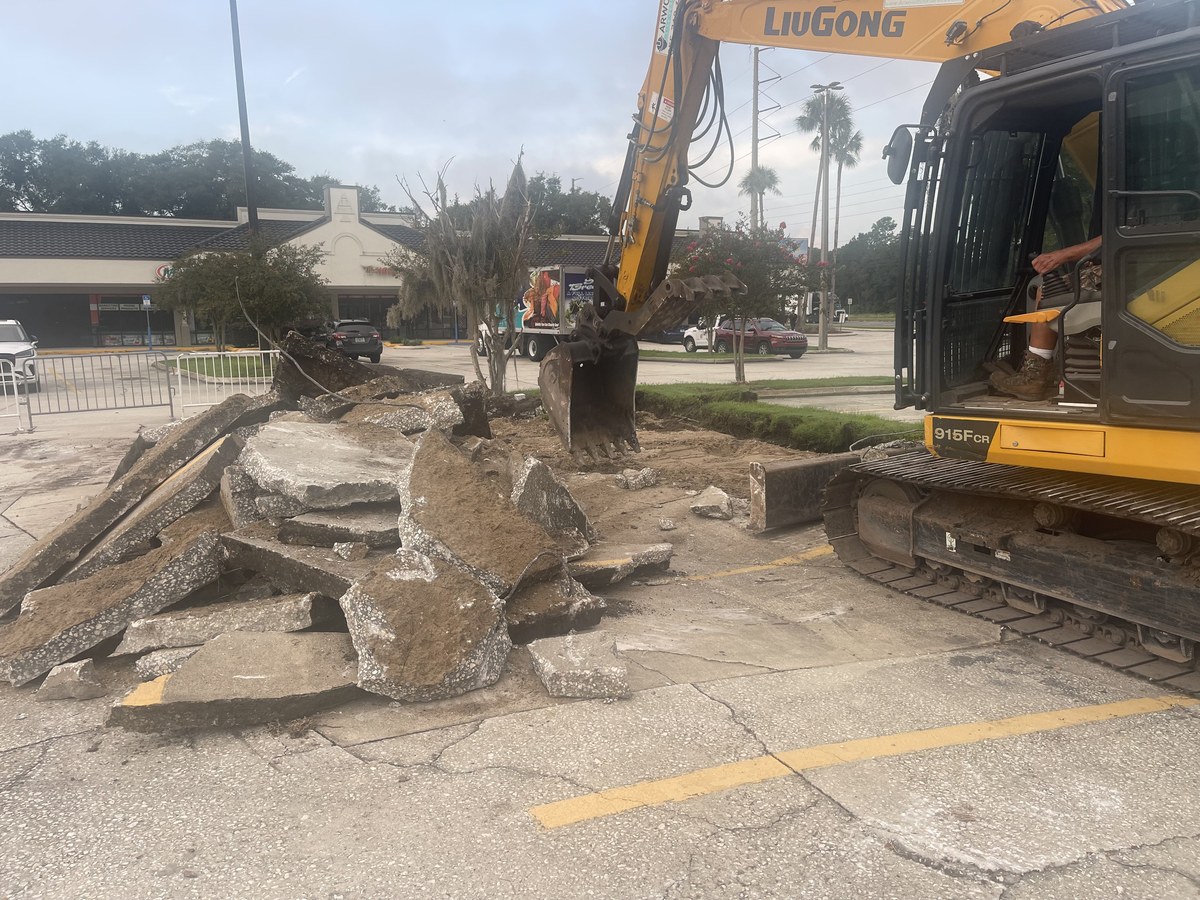
This guide draws on St. Johns County’s own pages and forms, the City of St. Augustine Beach, and state agencies including the Florida Department of Environmental Protection (FDEP) and the Florida Fish and Wildlife Conservation Commission (FWC), all checked on November 15, 2026. Rules change, so confirm with the office named before you file or schedule work.
Which office issues the permit for this address?
The Florida Department of State city and county list shows St. Augustine and St. Augustine Beach as the cities in St. Johns County, along with the St. Johns County portion of the Town of Marineland, which also extends into Flagler County. Hastings is no longer a town: the County says voters dissolved it in 2017, and it has been unincorporated since March 1, 2018. Ponte Vedra Beach, Fruit Cove, World Golf Village, Vilano Beach, St. Augustine South, Crescent Beach, and Flagler Estates are unincorporated communities, so their permits go to the County.
| Where the parcel is | Permit office | Where to start (government contacts) |
|---|---|---|
| Unincorporated St. Johns County, including Ponte Vedra Beach, St. Augustine South, and Hastings | St. Johns County Building Department, 4040 Lewis Speedway, St. Augustine | County building permit guidelines; County Building Department (904) 827-6800 |
| City of St. Augustine | City of St. Augustine, including its historic review | See our St. Augustine historic demolition review guide |
| City of St. Augustine Beach | St. Augustine Beach Building Department, City Hall, 2200 A1A South | City Building page; City Building Department (904) 471-8758 |
| Town of Marineland (St. Johns County portion) | Ask the Town first | Town of Marineland |
A St. Augustine mailing address does not mean the parcel is inside city limits. Check the Property Appraiser record; the County says you will need the Parcel ID to start a permit anyway.
What the County’s demolition application asks for
The St. Johns County Demolition Permit Application is a short, notarized form, but it collects more than many owners expect. Have this ready before you sit down with it:
- the tax parcel number, the site’s legal (tax) description, and an estimated completion date;
- the owner’s, the contractor’s, and the fee simple titleholder’s names and addresses, plus a bonding company if there is one;
- the prior use of the building (residence, business, school, or other), its square footage, its height, and the number of floors; and
- notarized signatures from the owner or agent and from the contractor, with the contractor’s license number.
By signing, the applicant certifies that no demolition has started before the permit is issued and acknowledges that wells, pools, septic systems, electrical, plumbing, and similar work need separate permits. The County’s permit page says a recorded Notice of Commencement is required before the first inspection on permitted projects over $5,000.
The County’s permit guidelines add that contractors must be licensed and registered with St. Johns County to obtain a permit, and that in most cases building permit applications are accepted only after a Clearance Sheet is issued.
The historic-resource review
St. Johns County’s application cites Section 3.01.07 of the Land Development Code, which requires the County to review every property for historical resource or landmark significance before a demolition permit is issued. The Land Development Code also bars causing the demolition of a Significant Cultural Resource or Landmark through purposeful neglect or intentional damage. Properties inside the City of St. Augustine go through the City’s own process, which our St. Augustine guide explains.
How long the permit lasts
The demolition application says a permit becomes null and void if the demolition is not started within 6 months, or if work is suspended or abandoned for 6 months at any point. A 90-day extension may be granted if requested in writing and justifiable cause is shown. The County fee schedule lists the permit extension fee at $53.
Government fees to expect
St. Johns County’s Schedule of Fees and Services, amended September 15, 2026, lists a demolition fee of $37 for residential and $64 for commercial and a $53 inspection or re-inspection fee. Penalties are listed at double the applicable fee plus $200. The Building Department page also says the County extended a 30 percent reduction in general building permit fees, including residential and commercial demolition, until further notice. Confirm which amount applies when you apply.
Inside St. Augustine Beach, the City’s building fee schedule (Resolution 25-10) lists demolition, interior or exterior, at $100. These are government fees, not a contractor price. For what the demolition work itself tends to involve, see our North Florida demolition cost guide, which covers St. Johns County.
Tearing down to rebuild: the Clearance Sheet and impact fees
If the demolition is the first step toward a new house, the County’s Development Review Manual, Section 17 is worth reading early. It says Clearance Sheet approval is needed before any clearing or land development activity, including installing a septic system or well, and before applying for a building permit. The Clearance Sheet pulls together the GIS address, flood zone information, zoning setbacks, minimum floor elevations, and impact fees for the parcel.
One detail can save real money on a teardown. Section 17 says impact fees are assessed when the Clearance Sheet application is processed, and that any claim for an exemption for the replacement of an existing home or building must be made no later than the building permit application. A claim not made by then is deemed waived. Keep photos and records of the existing house.
Flood zones and the oceanfront
St. Johns County’s Floodplain Management Department says the Land Development Code and the Florida Building Code apply to all development wholly or partly inside a Special Flood Hazard Area, including Zones A, AE, AH, AO, and VE. Any development in the floodplain requires a construction permit. The County defines a substantial improvement as work costing 50 percent or more of the structure’s market value before the work starts. New construction and substantial improvements must meet those flood requirements.
The County’s Floodplain Facts page links to the SJC Flood Zone Viewer, which shows flood hazards, storm surge zones, and the Coastal Construction Control Line. For lots that abut the ocean in places like Ponte Vedra Beach, Vilano Beach, Crescent Beach, and Butler Beach, the County’s Clearance Sheet site plan must show the Coastal Construction Control Line and any DEP permit if development, excavation, clearing, or structures, including septic tanks or drainfields, are proposed seaward of it. The FDEP CCCL program regulates structures and activities that can erode the beach or destabilize dunes, so ask FDEP whether work near the dune needs a permit or exemption. For riverfront and marsh-side lots, including in St. Augustine South, check the flood zone in the viewer before planning a rebuild.
Trees, land clearing, and gopher tortoises
St. Johns County’s Environmental Development Review FAQ says tree removal on a lot under one acre with an existing home does not need a tree removal permit, as long as the tree is not a specimen tree and is not inside a conservation area or buffer. Ponte Vedra is the notable exception: residential lots in the Ponte Vedra Zoning area (Ordinance 20-38) need a tree removal permit to remove any protected tree. Clearing a lot for a new home goes through the Clearance Sheet process.
If a new home follows, Section 17 says trees in any area with six inches or more of grade change are considered removed, and trees kept within ten feet of construction need protection barricades.
Gopher tortoises are a separate, state-level check. The County’s Clearance Sheet site plan checklist asks applicants to show gopher tortoise burrows and other preservation areas on the lot. FWC says a relocation permit is required before disturbing a potentially occupied burrow, and that disturbance includes any work within 25 feet of a burrow, including vegetation clearing, grading, construction, and heavy-equipment staging. If all of that stays at least 25 feet from every burrow, FWC says a permit may not be needed. Walk the lot early, including where the container would sit.
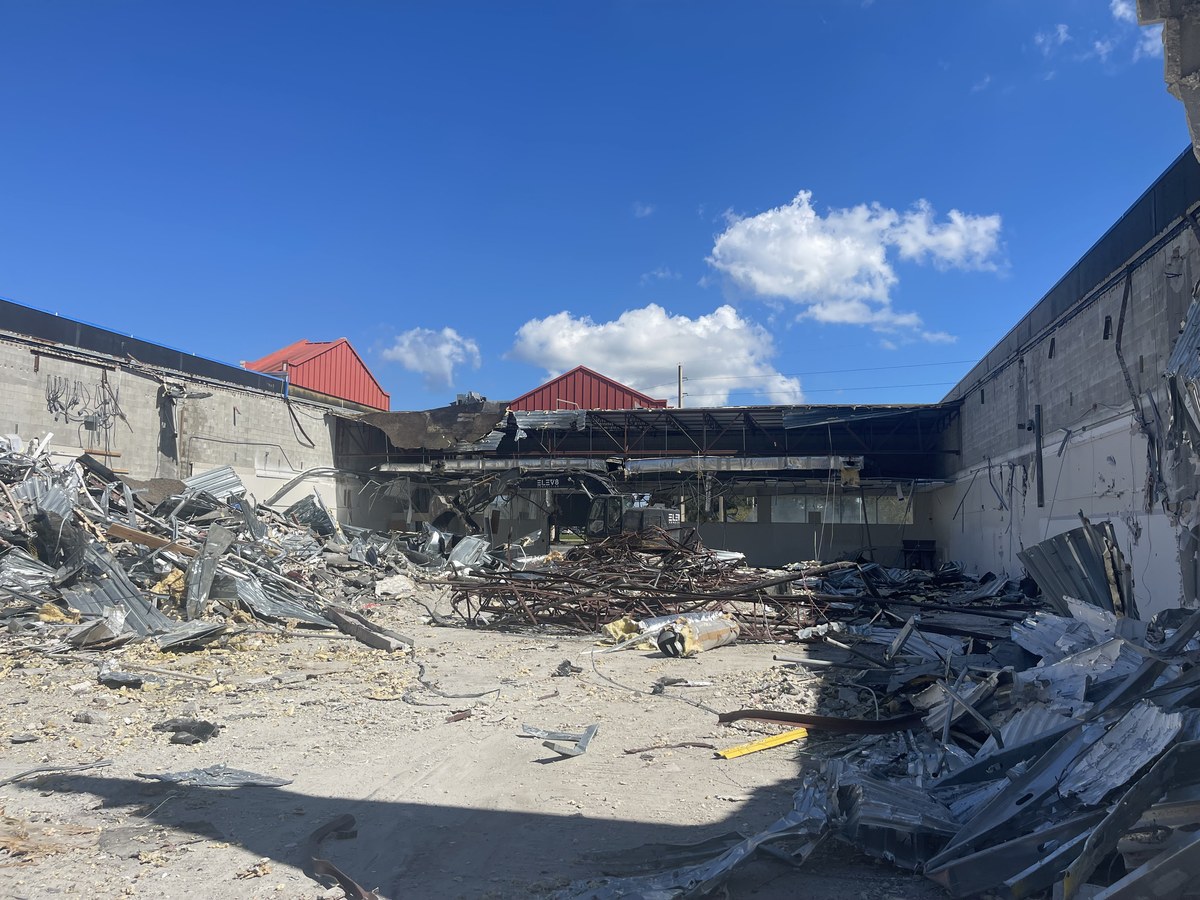
Asbestos, lead, and the state notice
The County’s demolition application spells out the asbestos rule. The federal asbestos NESHAP requires written notice before demolishing commercial, institutional, public, and industrial buildings, excluding residential buildings with four or fewer units that remain residential. The application says that notice goes to the FDEP Northeast District Air Program at 8800 Baymeadows Way, Suite 100, Jacksonville (government office, (904) 256-1566) at least ten working days before demolition. FDEP says that since March 23, 2025, the fee is $100 when the notice is filed electronically and paid at the same time through its Business Portal, or $200 otherwise. Commercial and larger residential buildings should be surveyed first.
For homes built before 1978, the EPA notes that its lead renovation rule covers renovation and partial demolition, not total demolition, but it still recommends lead-safe practices.
Utilities, wells, and septic
Start with the utility providers named on the bills. Where the St. Johns County Utility Department provides water or sewer, its Disconnection of Service form asks for the account number, the date you want service disconnected, and a required forwarding address. The County’s utility locating page says anyone digging near a utility corridor must call 811 first. Sunshine 811 asks for notice at least two full business days before digging, not counting weekends and state holidays.
Older homes in Hastings, Flagler Estates, and other rural parts of the county may sit on wells and septic tanks. The Florida Department of Health in St. Johns County still handles septic permitting and inspections, even though FDEP took over the state septic program in 2021; its listed number is (904) 506-6081 (government office).
Where demolition debris can and cannot go
St. Johns County treats demolition debris hauling as a franchised service. The County’s demolition application cites Ordinance 89-20, which makes it illegal for anyone without a valid franchise to collect, haul, or transport construction and demolition debris within the County, and the County publishes a list of C&D franchise haulers effective July 1, 2024 through June 30, 2027. Before a roll-off container is delivered, confirm the hauler is on that list. Inside St. Augustine Beach, the City’s Building page says private collection of construction and demolition debris requires a City franchise agreement.
- The County’s C&D page says residents and businesses must take construction and demolition debris to either the St. Marks C&D Disposal Facility at 1000 St. Marks Pond Blvd. in St. Augustine or the Waste Pro Transfer Station at 3705 Deerpark Blvd. in Elkton. Call the facility to confirm accepted materials, hours, and rates before hauling.
- The County’s Tillman Ridge (3005 Allen Nease Rd., Elkton) and Stratton Road (250 N. Stratton Rd., St. Augustine) transfer stations accept pressure-treated wood at $67.26 per ton, cash or check only. They are open Monday through Friday, 7 a.m. to 6 p.m., and Saturday, 7 a.m. to 1 p.m. A County resident FAQ says residents with proof of residence can bring items and lists residential construction debris across the scale for a charge, so for a small load ask the County Solid Waste Division ((904) 827-6980, government office) which site applies.
- Construction and demolition debris, tires, and household hazardous waste are not collected at the curb. Clear out paint and chemicals before demolition.
- Clean concrete, brick, and metal can often be separated for recycling, and asbestos-containing material is handled under the state and federal asbestos rules, not as ordinary debris.
Matching the job to the right questions
| Project | Questions to settle first |
|---|---|
| Complete house demolition | Jurisdiction, historic review, Notice of Commencement, utilities, septic, franchised hauler, asbestos |
| Teardown and rebuild | Clearance Sheet, impact fee replacement claim, flood zone, trees, gopher tortoises |
| Oceanfront home in Ponte Vedra Beach, Vilano Beach, or Crescent Beach | Coastal Construction Control Line, FDEP permit or exemption, Ponte Vedra tree permit, flood zone |
| Detached garage, shed, or accessory structure | Whether the County treats it as demolition, electric to the structure, burrows near the work area (see our St. Johns County garage demolition article) |
| Commercial or industrial demolition | Asbestos survey and FDEP notice, utilities, debris sorting |
Asking Dependable Demolition about a St. Johns County project
Dependable Demolition handles residential and commercial demolition, including complete, selective, and interior work, plus driveway, shed, and pool removal. St. Johns County is among the North Florida counties covered in our demolition cost guide. To ask about a specific property, call (855) 713-6280 or email [email protected] with the project address, a short description of the structure, and any photos you have. This is an inquiry, not a reserved date: scope and scheduling are confirmed after we review the address. The ranges on this page are averages from other online sellers, not a Dependable quote. Dependable gives a firm quote after seeing the site.
What demolition costs around St. Johns County
St. Johns County work can be inland, historic, or oceanfront, and debris rules belong in the same conversation as the permit office. The averages below cover a house teardown, concrete or slab removal on coastal lots, and 20- and 30-yard roll-offs posted in Northeast Florida.
| Work | Average published range |
|---|---|
| Full house demolition | $4–$12 per sq ft, or about $6,500–$22,950 for a typical job |
| Concrete driveway or slab removal | $2–$7 per sq ft |
| 20-yard roll-off dumpster in Northeast Florida | $505 average ($449–$550 posted) |
| 30-yard roll-off dumpster in Northeast Florida | $585 average ($555–$650 posted) |
These figures are averages compiled from other online sellers and cost guides, not a Dependable Demolition quote. Sources: HomeGuide, Redfin, Angi, HomeGuide, Angi, Fixr, American Rolloffs, VETCANS, 904 Dumpster, and Double D’s Dumpsters.
Dependable gives a firm quote after seeing the site in St. Johns County. Call (855) 713-6280 or email [email protected].
Frequently asked questions
Who issues a demolition permit in St. Johns County?
The St. Johns County Building Department handles unincorporated areas, including Ponte Vedra Beach, St. Augustine South, and the former Town of Hastings. The City of St. Augustine and the City of St. Augustine Beach issue their own permits.
How much is a demolition permit in unincorporated St. Johns County?
The County fee schedule amended September 15, 2026 lists $37 for residential and $64 for commercial demolition. The Building Department also posts a 30 percent fee reduction in effect until further notice, so confirm the amount when applying. These are government fees, not a contractor price.
How long is a St. Johns County demolition permit good for?
The County’s application says it becomes void if demolition does not start within 6 months or stops for 6 months. A 90-day extension may be granted on written request with justifiable cause.
Does St. Johns County check for historic buildings before a demolition?
Yes. Under Land Development Code Section 3.01.07, the County reviews each property for historical resource or landmark significance before issuing a demolition permit. It is separate from the City of St. Augustine’s historic review.
Can I take demolition debris to Tillman Ridge or Stratton Road?
The County directs C&D debris to the St. Marks C&D Disposal Facility in St. Augustine or the Waste Pro Transfer Station in Elkton. Tillman Ridge and Stratton Road accept pressure-treated wood and some other items for a fee. Ask the County Solid Waste Division before hauling a mixed load.
Who can haul demolition debris in St. Johns County?
A business hauling C&D debris needs a valid County franchise under Ordinance 89-20. The County lists its C&D franchise haulers for July 1, 2024 through June 30, 2027, and St. Augustine Beach has its own franchise rule.
Do I need a tree permit to demolish a house in St. Johns County?
Usually not on a lot under one acre with an existing home, unless the tree is a specimen tree or sits in a conservation area or buffer. Residential lots in the Ponte Vedra Zoning area need a permit to remove protected trees.
Is there an asbestos notice for demolition in St. Johns County?
When the federal asbestos rule applies, notice goes to the FDEP Northeast District at least 10 working days before demolition, for $100 filed and paid online or $200 otherwise. Residential buildings with four or fewer units are generally excluded.
How do I ask Dependable Demolition about a St. Johns County project?
Call (855) 713-6280 or email [email protected] with the project address. Scope and scheduling are confirmed after the inquiry. The ranges on this page are averages from other online sellers, not a Dependable quote. Dependable gives a firm quote after seeing the site.
Related guides: for addresses inside the City of St. Augustine, see our St. Augustine historic demolition review guide. For the county to the south, see our Flagler County demolition planning guide.
Follow Dependable Demolition: see recent jobs and equipment on our Facebook Page and company updates on our LinkedIn Page.
Posted on November 15, 2026 in General